Solvent-Based & Water-Based Polyurethane Finishes
The coating decides how your floor looks and how it ages. We apply both solvent-based and water-based polyurethane systems and will tell you plainly which suits your timber, household and timeline.
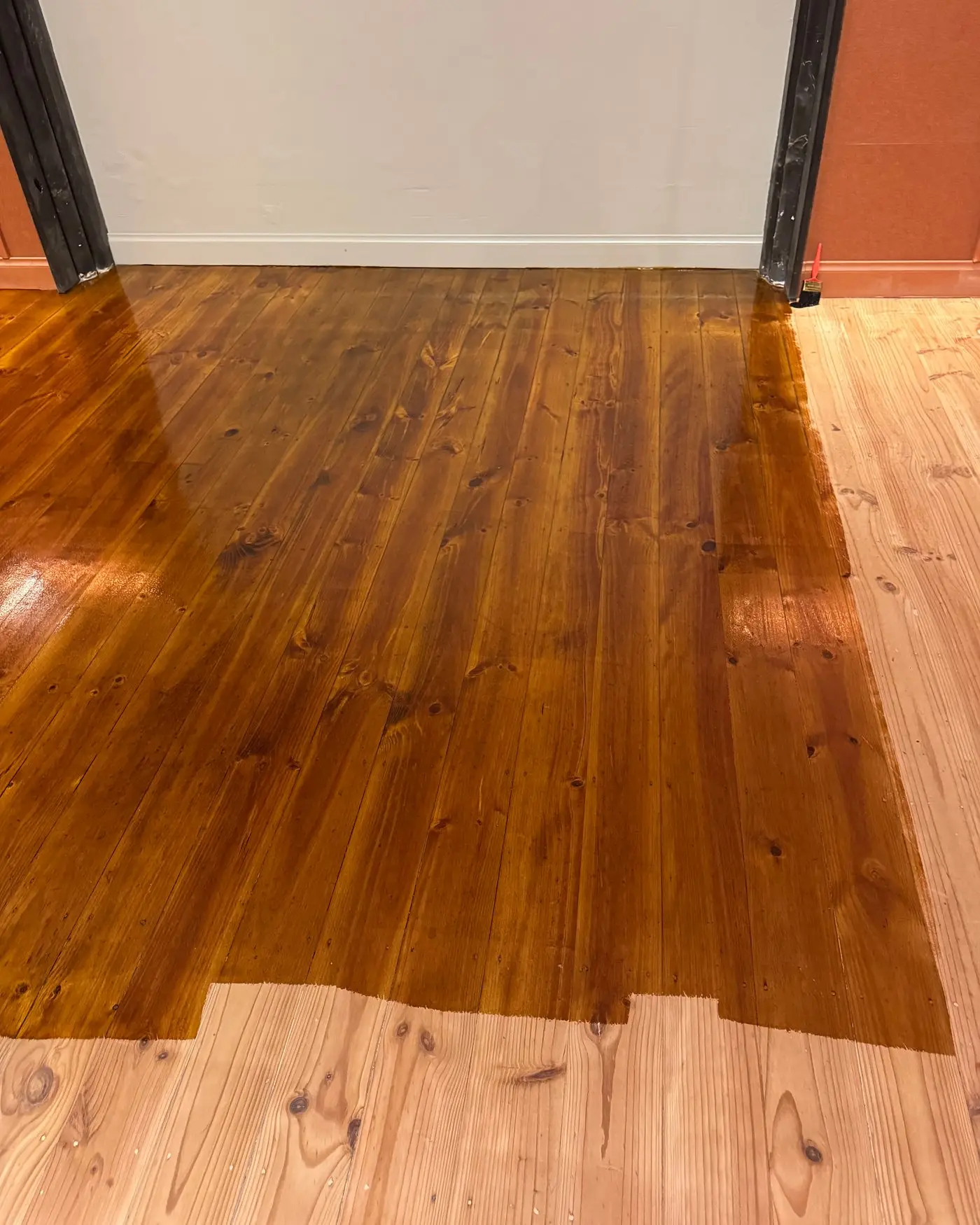
The short answer
Water-based polyurethane stays clear, has little odour and can be recoated in two to three hours. Solvent-based polyurethane adds a warm amber tone, smells strongly and needs about 12 hours between coats. In two-pack form both are very hard-wearing, so the choice usually comes down to colour and how soon you need to be back in the house.
What is included
- Solvent-based polyurethane (two-pack)
- Water-based polyurethane (single & two-pack)
- Matte, satin, semi-gloss & high gloss
- Tung oil & hardwax oil options
- Non-yellowing finishes for pale timbers
- Commercial-grade wear coatings
Questions we hear
Which finish is more durable?
Both modern systems are very hard-wearing. Two-pack solvent polyurethane has long been treated as the toughest. Premium two-pack water-based is at least close to it, and it cures faster with much less odour.
Will the floor yellow over time?
Solvent-based finishes amber with age, which many people like on darker timbers. Water-based stays clear, so it is the right choice for pale species like Tasmanian oak or blackbutt.
Is water-based polyurethane as durable as solvent-based?
Good two-pack water-based finishes are very hard-wearing. Solvent has long been treated as the toughest, while some suppliers now say two-pack water-based matches it. For most homes, either will hold up well.
How long does the smell last?
Solvent-based finishes have a strong odour, and the house needs ventilating for two to three days. Water-based finishes have a low odour, so most people can stay in the home.
Can I walk on the floor the day after coating?
With socks, usually yes, once the final coat has reached its light-traffic time. Keep furniture off until the time given for your product, and use felt pads when it goes back.
Drying and curing times compared
These are manufacturers' figures for one product of each type. Cold or humid weather makes every time longer.
| Stage | Water-based two-pack (Bona Traffic HD) | Oil-based polyurethane (Feast Watson Timber Floor Varnish) |
|---|---|---|
| Recoat | 2 to 3 hours | 12 hours |
| Light foot traffic | 6 hours | 24 hours |
| Normal use | 24 hours | 72 hours |
| Rugs and full cure | Rugs after 3 days | Full cure after 7 days |
From the manufacturers' data sheets. The product used on your floor may differ, and we confirm its times with your quote.
Which polyurethane is right for your floor?
We will tell you which suits your timber and timeline, and why.
- Pale timbers such as Tasmanian oak and blackbutt: water-based keeps them from yellowing
- Deep, warm timbers and period homes: solvent-based adds an amber glow many people like
- Staying in the house or working to a tight deadline: water-based
- Baltic pine: either, depending on whether you want it pale or golden
Matte, satin, semi-gloss or high gloss?
Sheen changes how much a floor shows. Matte and satin hide fine scratches and dust best, which suits busy homes and pets. Semi-gloss and high gloss look richer and reflect more light, and they show every mark. Satin is the safe middle if you are unsure.
Hardwax oil and tung oil
Oils soak into the timber and leave a natural, low-sheen look. Worn areas can be touched up without sanding the whole floor, but they need re-oiling more often than polyurethane. One published guide suggests every one to three years for hardwax oil.
How often does a polyurethane floor need recoating?
Published advice runs from about three to seven years, depending on traffic. Recoat before the finish wears through to bare timber. After that point, the floor usually needs a full sand.