Hardwood, Engineered & Hybrid Floor Installation
We install solid hardwood, engineered timber and hybrid floors in new builds and renovations. Every job starts with moisture testing and subfloor levelling so the floor stays flat and quiet for decades.
The short answer
The right floor depends on what is underneath and how the room gets used. Solid hardwood can be re-sanded many times, engineered timber is more stable over concrete slab, and hybrid is waterproof and usually the cheapest to lay. Published Melbourne labour rates run from about $25 per square metre for a floating floor to $90 for chevron.
What is included
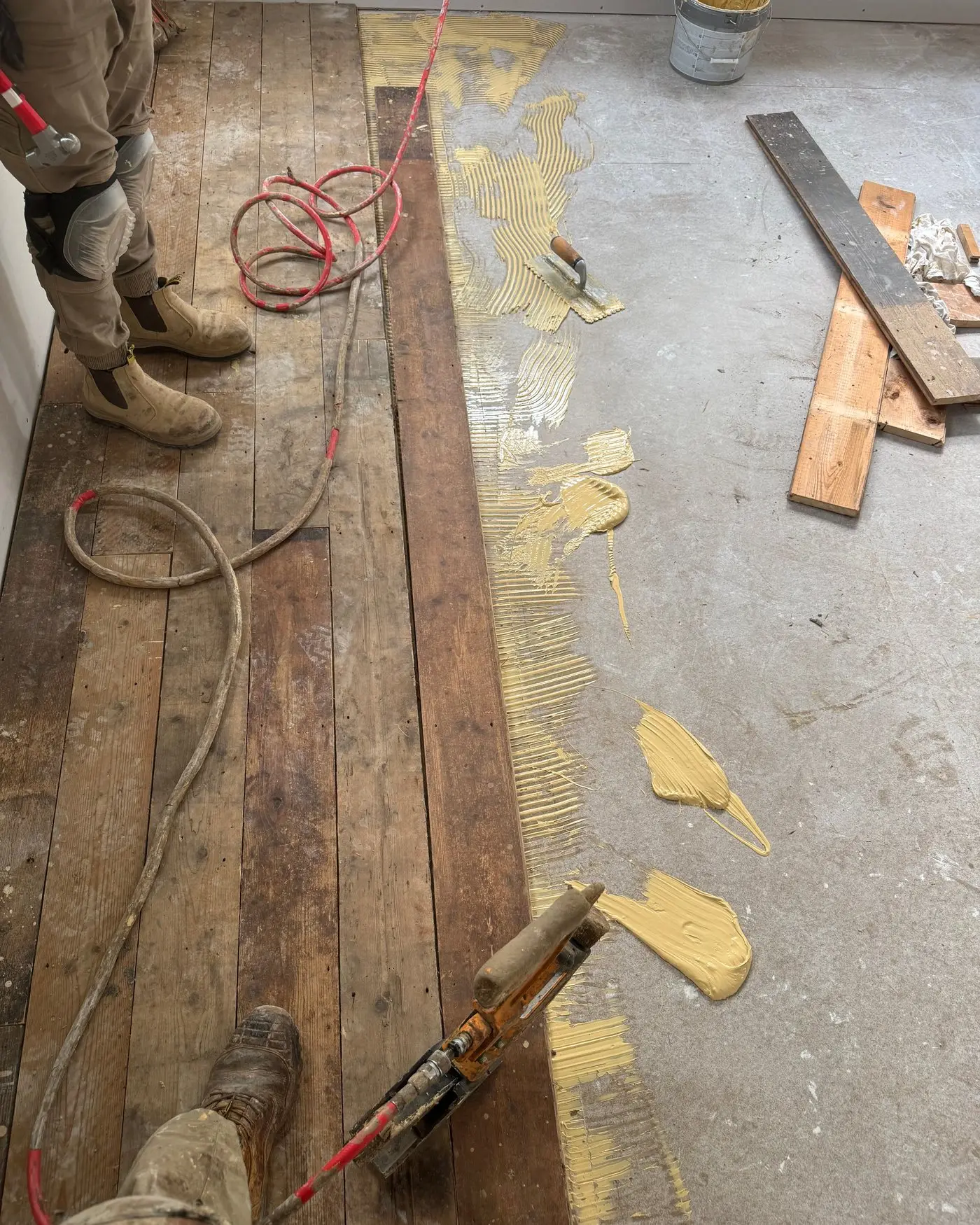
- Solid hardwood: secret-nailed or direct-stick
- Engineered timber: floating or glued
- Hybrid (SPC/WPC) click floors
- Herringbone & chevron pattern laying
- Subfloor levelling & moisture testing
- Skirting, scotia, trims & stair nosings
Questions we hear
Hardwood, engineered or hybrid: which should I choose?
Hardwood can be re-sanded many times and lasts a lifetime. Engineered gives the same look with better stability over slab. Hybrid is waterproof and the most budget-friendly for kitchens, laundries and rentals.
Do you remove the old floor?
Yes. We remove carpet, tiles, laminate or old boards, dispose of the waste and prepare the subfloor as part of the quote.
Can you install over concrete slab?
Yes. We moisture-test the slab, apply a moisture barrier where needed and level any high or low spots before laying.
How long does floor installation take?
Published figures run from about three to seven days for a typical home. Subfloor work, adhesive drying and pattern laying are what extend it. We confirm the schedule in your quote.
Is engineered timber or hybrid better?
Engineered timber has a real wood surface and may be re-sanded if the wear layer allows it. Hybrid is waterproof and cheaper but cannot be sanded. Choose hybrid for wet or hard-use rooms and engineered where the look of real timber matters.
Can a floating floor be installed on concrete?
Yes, if the slab is dry and flat. Floating floors also need expansion gaps around the edges, hidden under skirting or trims.
Can you install timber over underfloor heating?
Often, but the heating has to be run and cooled before laying and brought back up slowly afterwards. Check that the flooring product is approved for heated slabs first.
Solid hardwood, engineered timber or hybrid?
Most people choose between these three. Start with the subfloor and the rooms involved, then look at budget.
| Compare | Solid hardwood | Engineered timber | Hybrid (SPC/WPC) |
|---|---|---|---|
| Surface | Timber all the way through | Real timber layer on a stable base | Printed layer on a rigid waterproof core |
| Can it be sanded? | Yes, many times | Depends on the wear layer | No |
| Usual fixing | Secret-nailed or direct-stick | Floating or glued | Floating click-lock |
| Wet areas | Not suited | Not suited | Kitchens, laundries and rentals |
How much does floor installation cost in Melbourne?
These are labour rates, so add the flooring itself. Patterned floors also need more material: allow about 5% extra for a straight lay and 8% to 12% for herringbone or chevron.
| Work | Typical published price |
|---|---|
| Floating engineered or hybrid | $25 to $60 per m² |
| Direct-stick or secret-nailed solid | $45 to $70 per m² |
| Herringbone or chevron | $55 to $90 per m² |
| Subfloor preparation | $15 to $50 per m² |
| Removing the old floor | $10 to $30 per m² |
| Stairs | $100 to $300 per step |
Ranges from Melbourne flooring companies' 2026 price guides, which differ, especially on stairs. They are a guide only and are not our prices.
Installing timber flooring on a concrete slab
A slab that is still releasing moisture will damage a timber floor from below. The Australian Timber Flooring Association gives drying guides of about three months for a 100 mm slab and six months for 150 mm, and also warns that age alone is not enough.
That is why we test the slab with a moisture meter before laying, and apply a moisture barrier where it is needed. The limit that applies depends on the adhesive and flooring product, so we follow the manufacturer's figure.
Why subfloor preparation decides how the floor turns out
High and low spots turn into hollow sounds, movement and failed joints. The association's guide for engineered floors asks for flatness within 3 mm under a 1 metre straightedge for floating floors and 3 mm under 3 metres for direct-fixed floors. We check this and level the subfloor first.
Does timber flooring need to acclimatise?
Sometimes. The association says acclimatising is not needed when the boards arrive close to the moisture level they will settle at, and that leaving them in the wrong conditions can cause problems. Engineered products vary by manufacturer. We check moisture on site and follow the product instructions, instead of a fixed number of days.
Herringbone and chevron floors
Pattern floors take longer because each block is set out from a centre line, and the edges need more cutting. Herringbone uses rectangular blocks that meet at right angles. Chevron boards are cut at an angle so they meet in a straight point. Both cost more than a straight lay.