Floor Sanding & Polishing Melbourne
Dust-controlled sanding brings tired timber back to bare wood, then a three-coat finish locks in colour and protection. We work on solid hardwood, parquetry, herringbone and engineered floorboards across Melbourne.
The short answer
Floor sanding takes a worn timber floor back to clean wood, and polishing seals it with a new protective finish. Melbourne price guides published in 2026 put sanding and coating at roughly $25 to $55 per square metre, and most homes take three to five working days. We measure the floor and give you a fixed written price.
What is included
- Solid hardwood, parquetry & herringbone
- Engineered floorboards (wear-layer checked first)
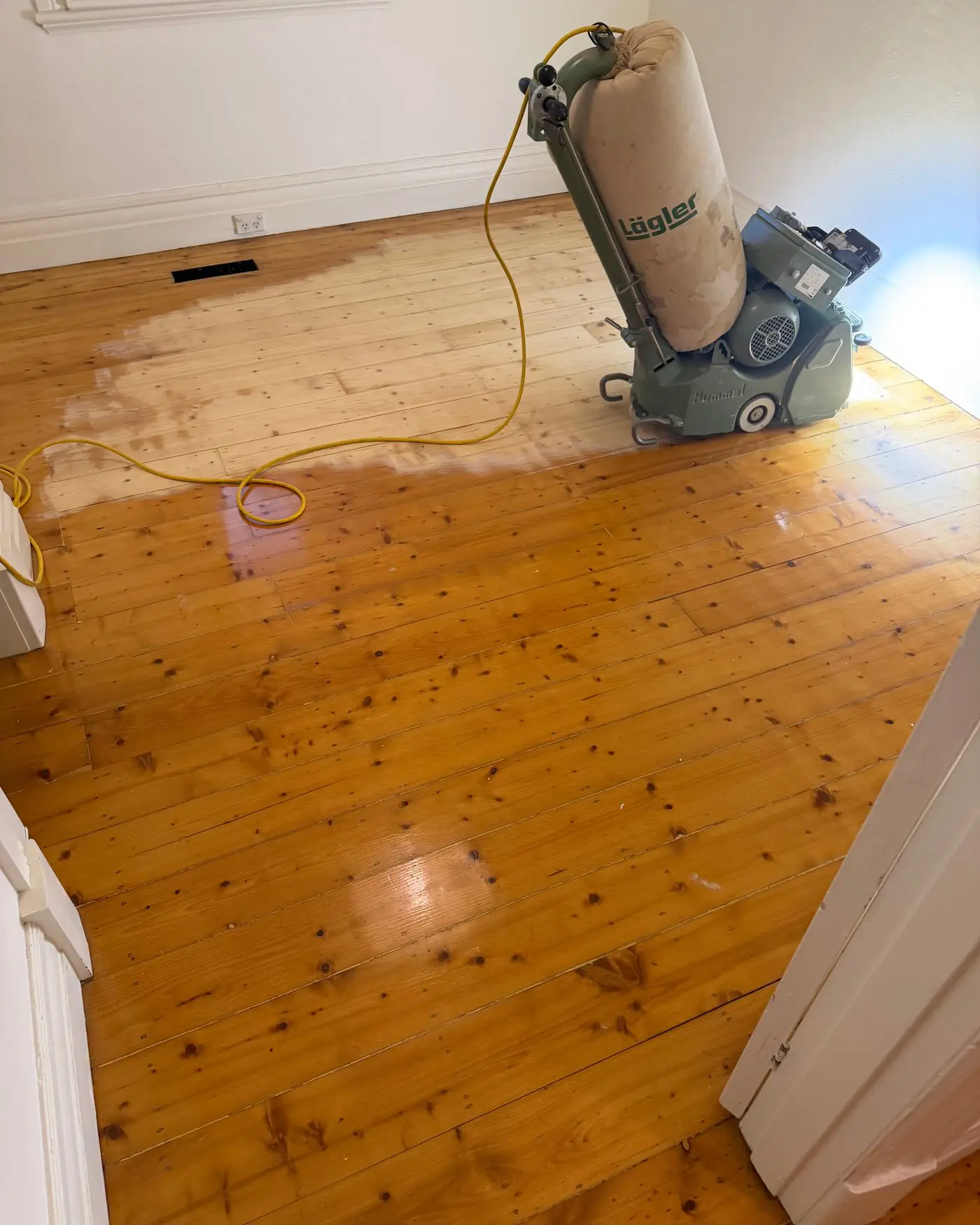
- Dust-controlled Lägler machines
- Gap filling, board replacement & repairs
- Staining, liming & custom colour matching
- Three-coat system with fine cut between coats
Questions we hear
How long does sanding and polishing take?
A typical three-bedroom home takes three to four days including drying time between coats. We confirm the schedule in your quote.
Can engineered floors be sanded?
Yes, if the wear layer is 3 mm or more. We measure the wear layer before quoting and recommend a buff-and-coat when a full sand is not suitable.
Do I need to move out?
You can stay in the house but you cannot walk on the floor until the final coat has cured. Most clients plan around the drying times we give them.
How much does it cost to sand and polish floors in Melbourne?
Published 2026 Melbourne guides mostly sit between $25 and $55 per square metre for sanding and coating, with gap filling, staining and stairs extra. We give a fixed written quote after a free site visit.
How often does a timber floor need sanding?
Published advice for a full re-sand ranges from about 8 to 15 years, depending on traffic and care. A recoat before the finish wears through can delay it.
Should boards be sanded when they are cupped?
Wait if you can. Boards that have swollen in damp weather can flatten out as they dry, and sanding them at their worst can leave them hollow later. Fix the moisture source first.
Can you sand just one area of a floor?
It can be done, but a patch often shows because the old finish has changed colour with age. Sanding the whole room, or up to a natural break such as a doorway, gives an even result.
Do you service the northern, eastern and southern suburbs?
Yes. We are based in Epping and sand and polish floors across all of Melbourne, including the north, the east, Bayside and the west.
How much does floor sanding cost in Melbourne?
Most companies price per square metre. The rate moves with the size of the job, the condition of the boards, the timber and the finish you choose. Small rooms cost more per metre because the setup is the same.
| Work | Typical published price |
|---|---|
| Sanding and coating | $25 to $55 per m² |
| Gap filling | Add $3 to $8 per m² |
| Staining | Add $8 to $15 per m² |
| Stairs | $15 to $30 per tread |
Ranges from Melbourne flooring companies' 2026 price guides, which vary. They are a guide only and are not our prices. Your written quote is what you pay.
Full sand or buff and coat?
A buff and coat lightly abrades the existing finish and adds a fresh coat. It suits a floor where the finish is still sound and the wear is only on the surface.
Deep scratches, water marks, grey patches and places worn through to bare timber need a full sand, because a new coat only sits on top of them. If you are not sure which you have, send us a photo.
How we sand and polish a floor
Every job follows the same order, and each step depends on the one before it.
- Punch nails, repair or replace damaged boards and fill gaps
- Sand in three passes from coarse to fine, with dust extraction on every machine
- Stain or lime the timber if you have chosen a colour change
- Apply three coats of polyurethane with a fine cut between coats
- Walk through the floor with you and go over care
Is dustless floor sanding really dust free?
No. Good extraction captures most of the dust at the machine, but no honest sander will promise zero. A little fine dust can still settle on ledges and fittings, so expect a light wipe-down afterwards.
Baltic pine, hardwood, parquetry and stairs
Baltic pine is common in Melbourne period homes. It is softer than Australian hardwood and marks more easily, so it needs a lighter hand on the machine. Tasmanian oak, spotted gum, blackbutt and jarrah are harder and hold a crisp finish.
Parquetry and herringbone have grain running in several directions, so they need finer, more careful sanding to avoid cross-grain scratches. Stairs are sanded by hand and priced per tread.
Can you change the colour of a timber floor?
Yes. Stains can warm or darken boards, and liming or limewash gives a pale, washed look. Some timbers take colour unevenly, so a test patch on your own boards is the reliable way to see the result before the whole floor is done.